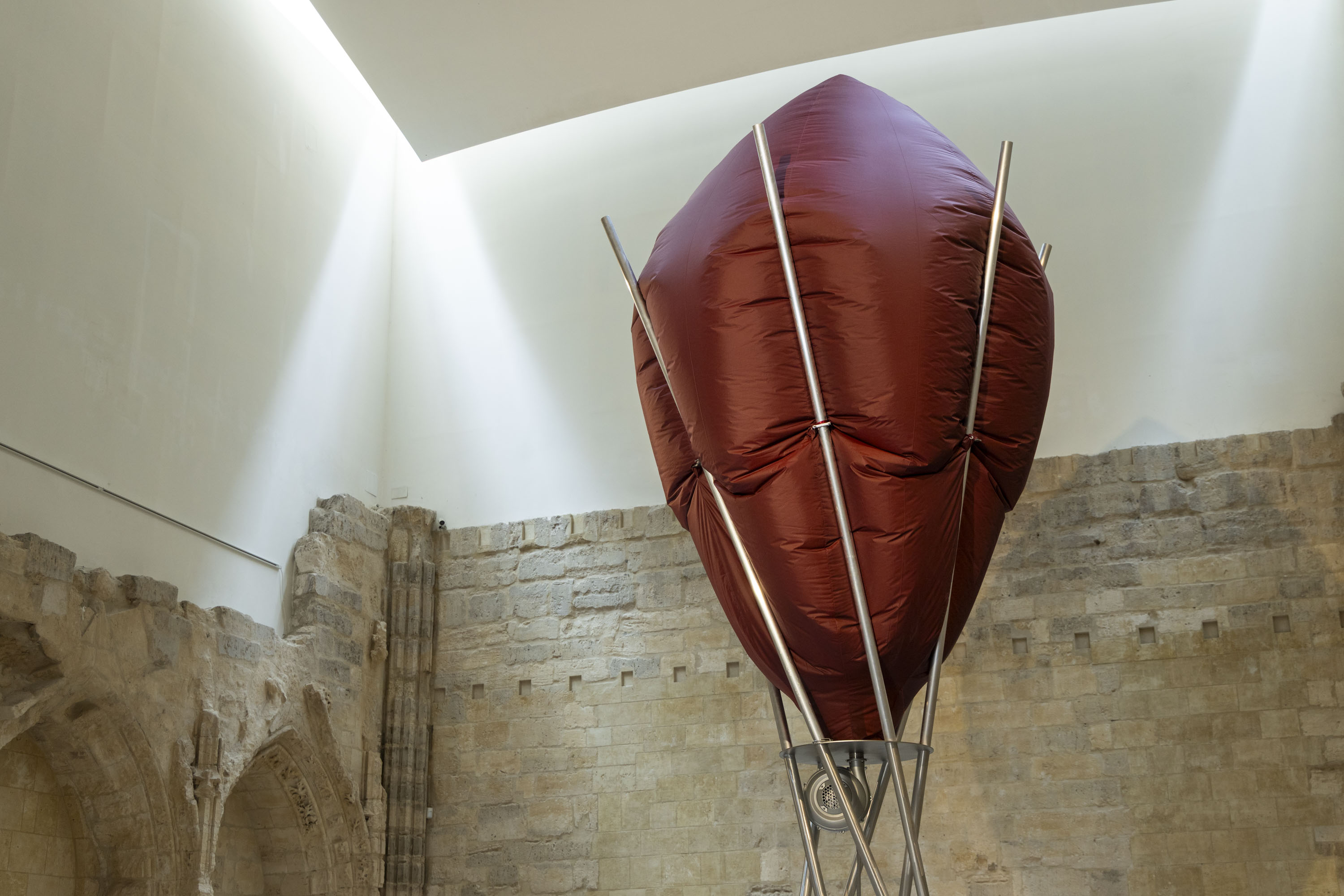
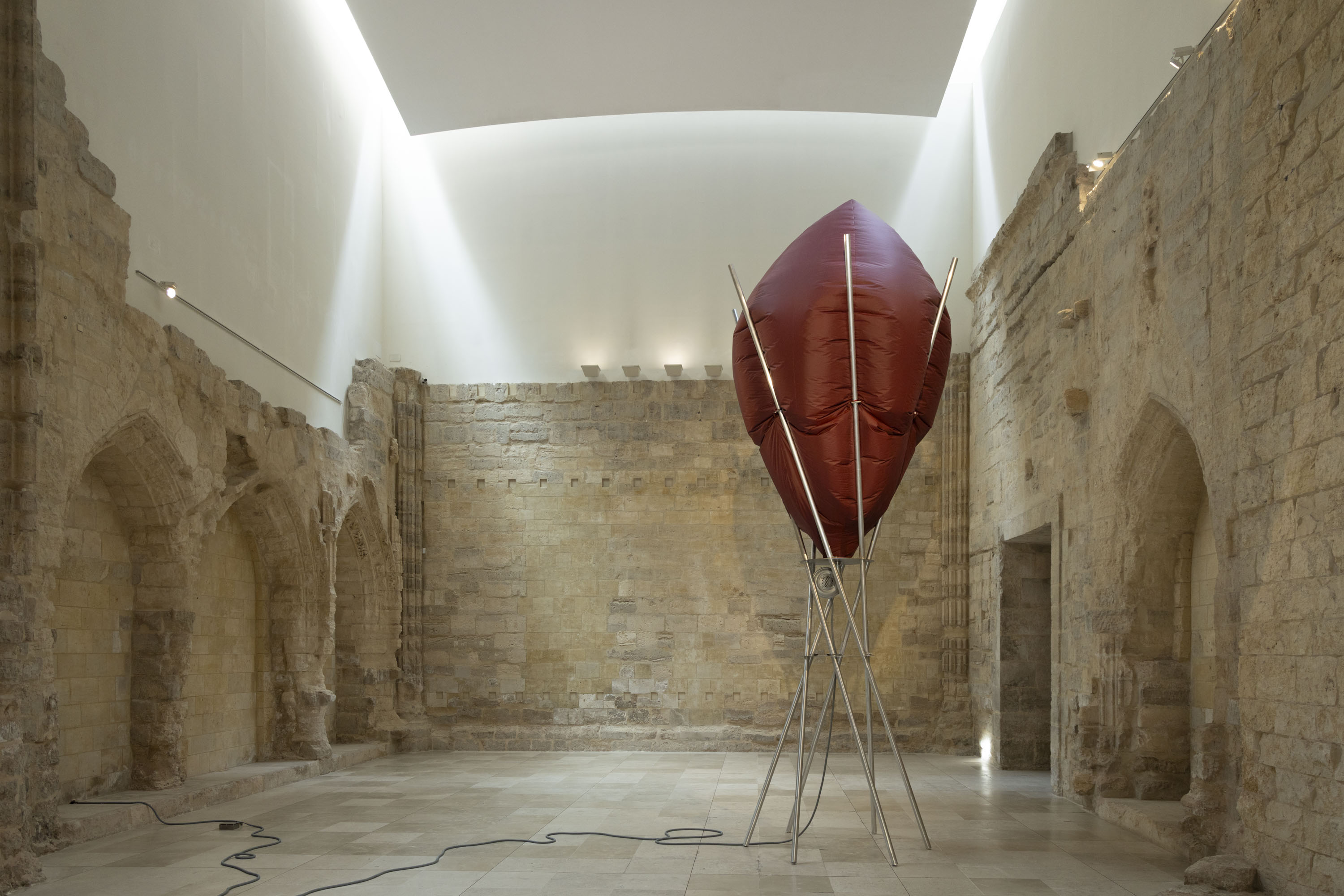
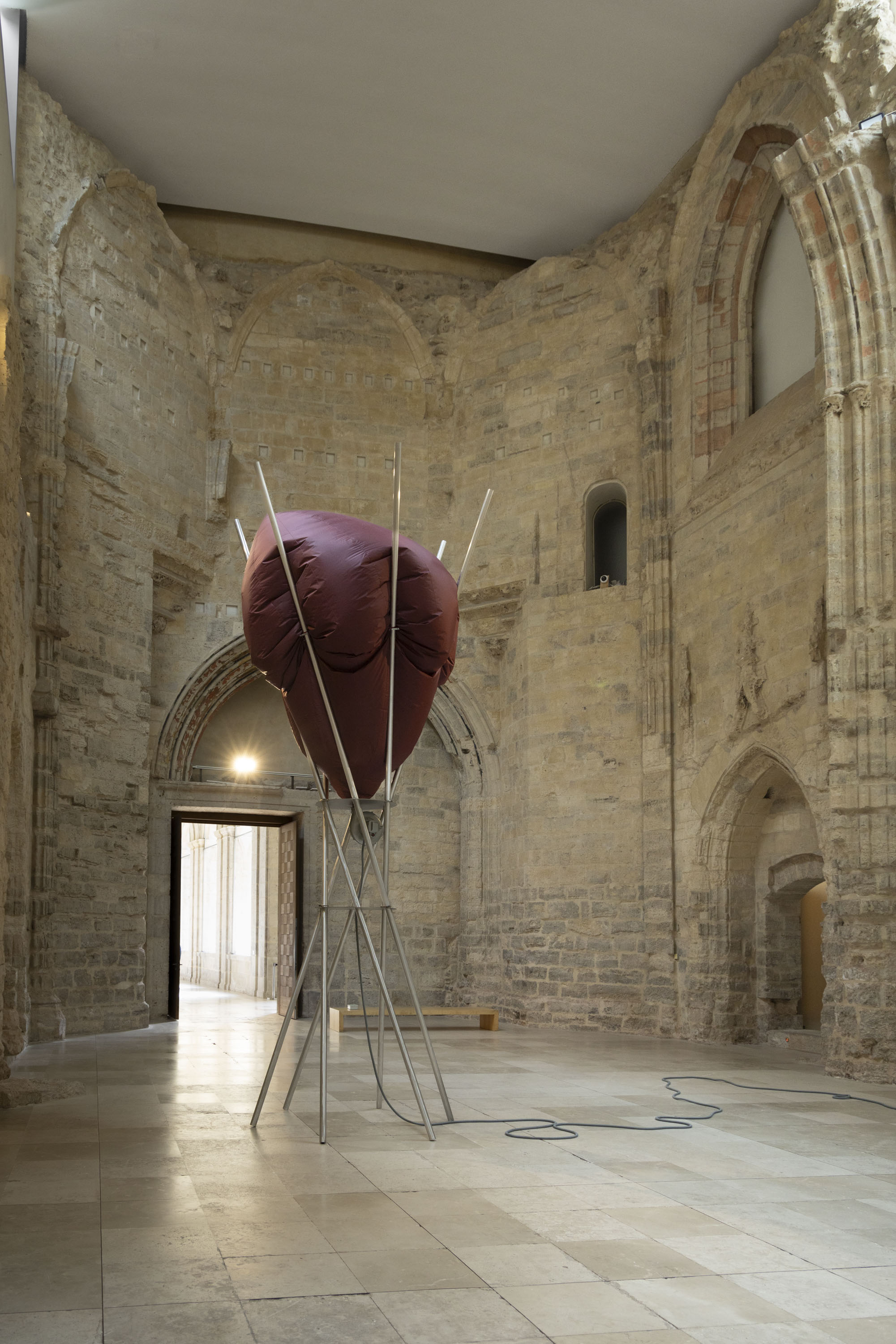
Fuster, que desde hace ya muchos años reside en la ciudad de Berlín, presta una atención detenida a dos cuestiones: la búsqueda de nuevas posibilidades expresivas del material y la relación que éste trenza con el cuerpo. En consecuencia, la atención al potencial dinámico de su quehacer, es notoria. Tiene la artista bien estudiada la tradición. En ella afloran nombres como el de Rebecca Horn o el de Jean Tinguely, artistas que pusieron el acento en la maleabilidad de la materia y en la danza de los cuerpos. Ambas referencias, entre muchas otras, atraviesan su trabajo y resuenan todavía hoy, y, con ellas en mente, ha concebido su intervención en la Capilla mediante una gran forma-cuerpo que se yergue en el centro del espacio. Parece atrapado en una sucinta estructura prismática, industrial, algo siempre presente en su obra, pero pronto advertimos que esta forma no sólo no es inerte sino que ofrece constantes vitales decididamente visibles. El aire es materia misma, y de ahí nace un título ( ) -Aire que yo respiro-, que Fuster toma de una clara voluntad de insuflar vida a sus esculturas, de tornarlas en un cuerpo que, como ella, respira. Aflora también aquí la influencia que la experiencia de la naturaleza, la suya y la de diferentes autores, algunos de ellos castellanos, a los que ha acudido tras la invitación a trabajar en nuestra institución. El aire, nos dice Fuster, no es el negativo de las cosas; es, por el contrario, el espacio aglutinante que da lugar a su convivencia. Trae el aire consigo la virtud política que permite ser y estar a los cuerpos, que les concede la posibilidad de ocupar, juntos, el espacio social, ese en el que la prospección estética que propone la artista quiere, también, respirar, existir, y, así, aportar, contribuir.
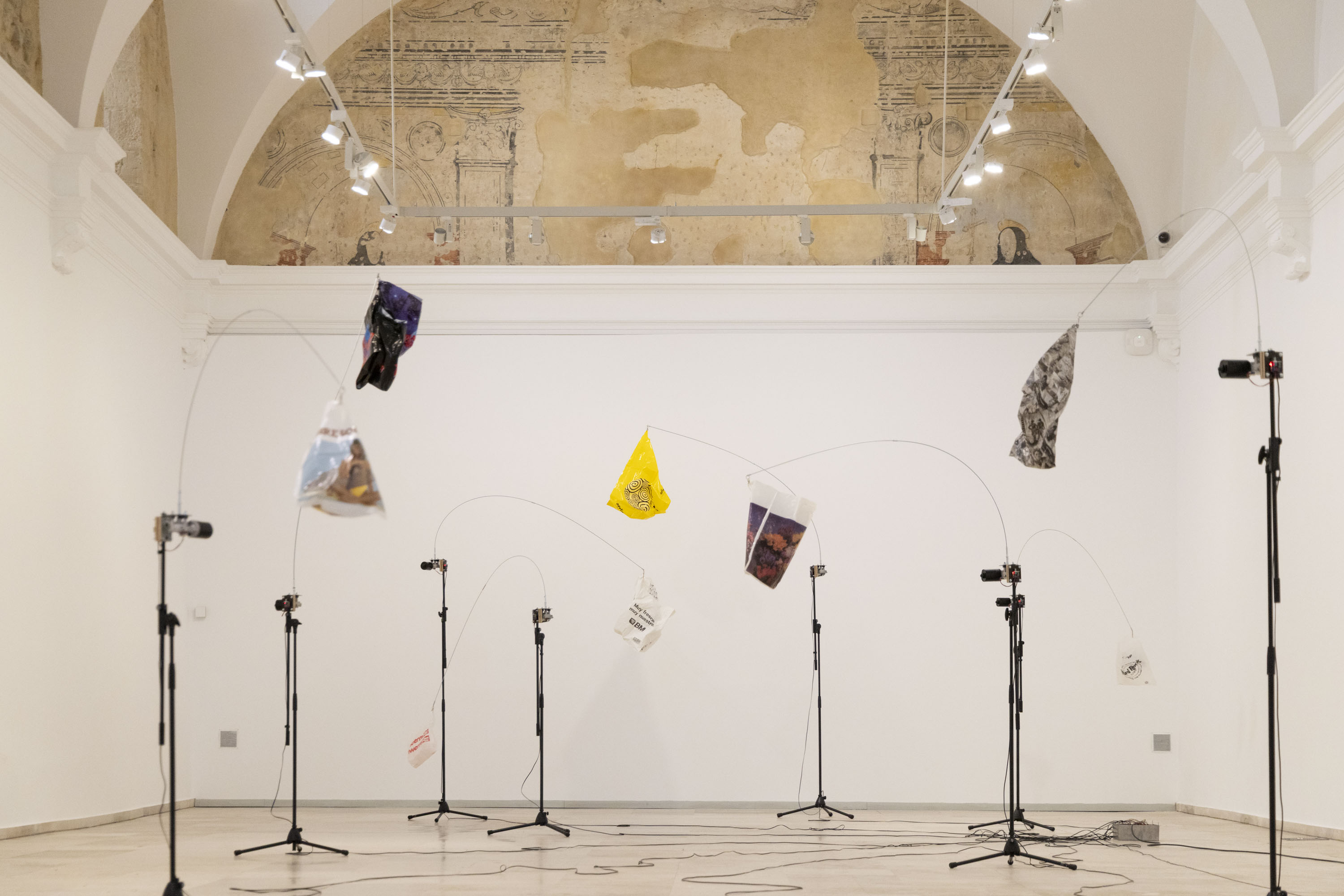
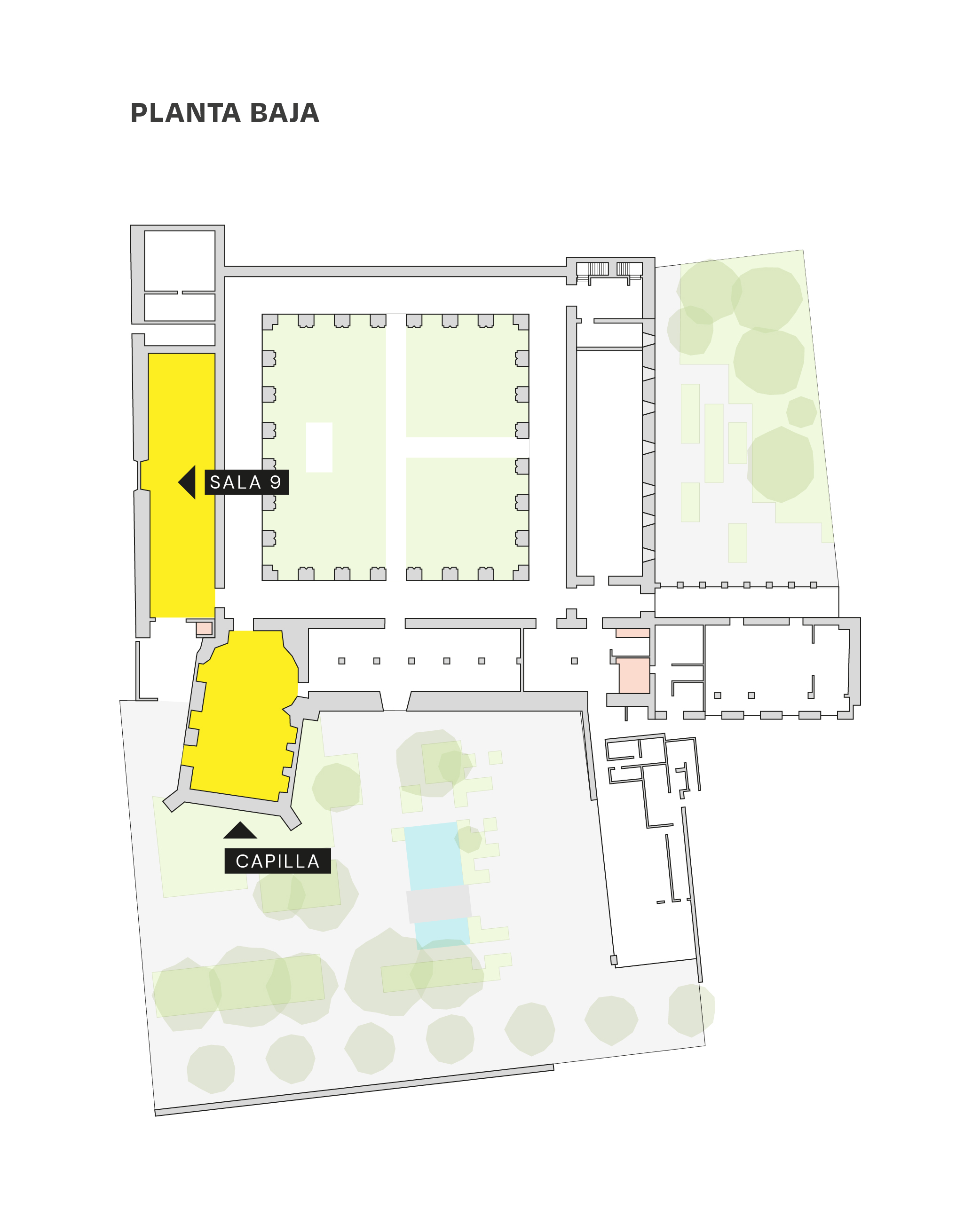
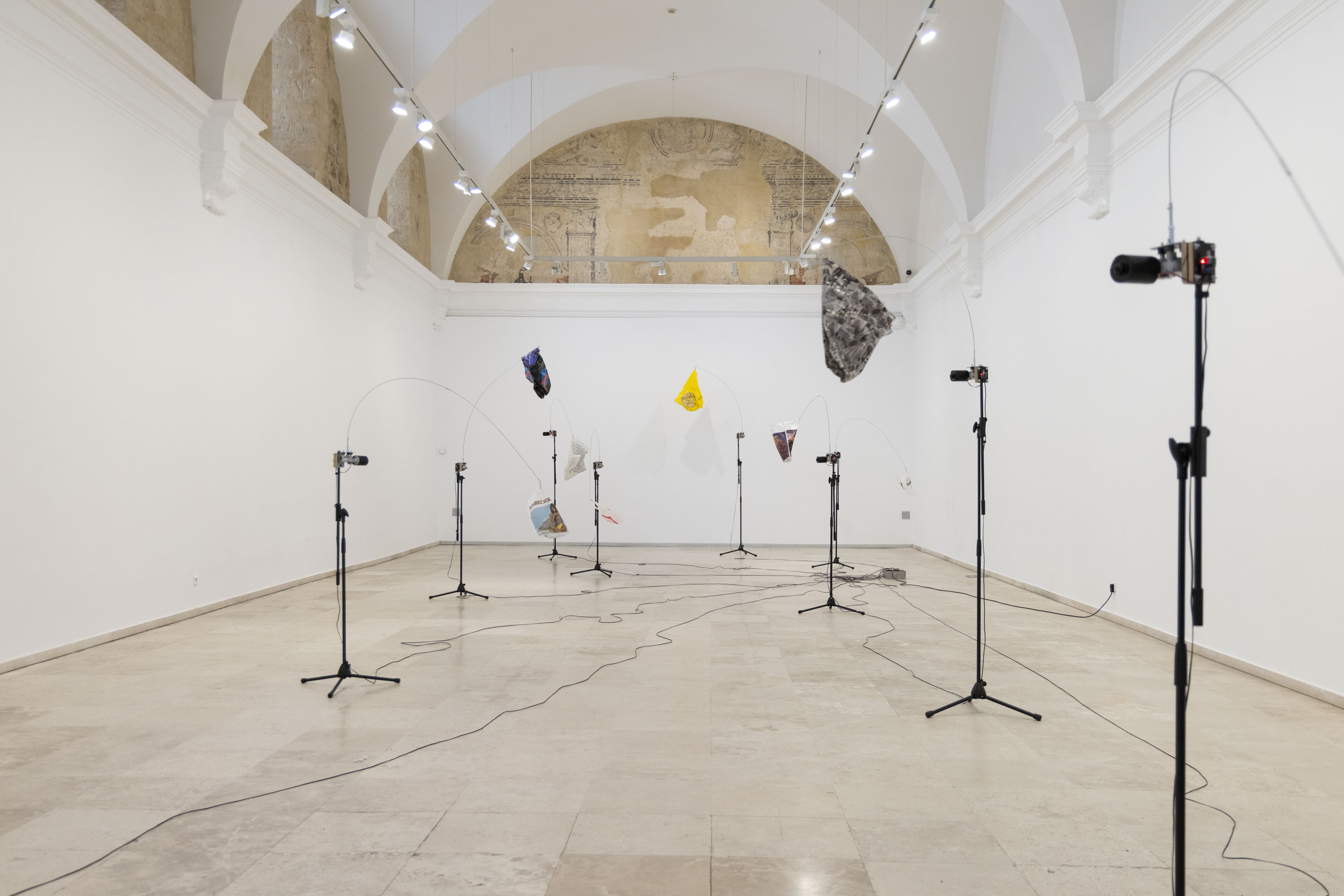
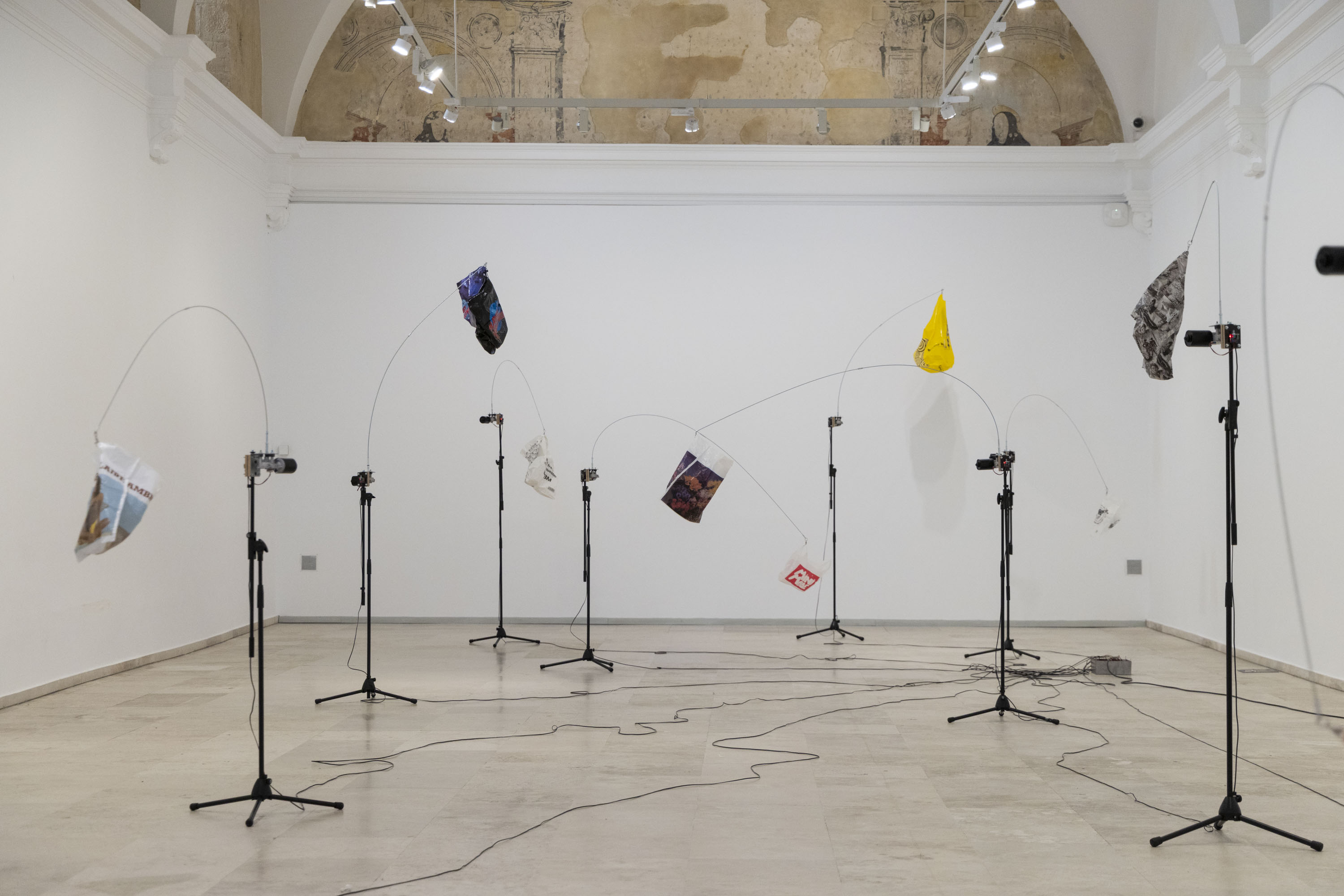
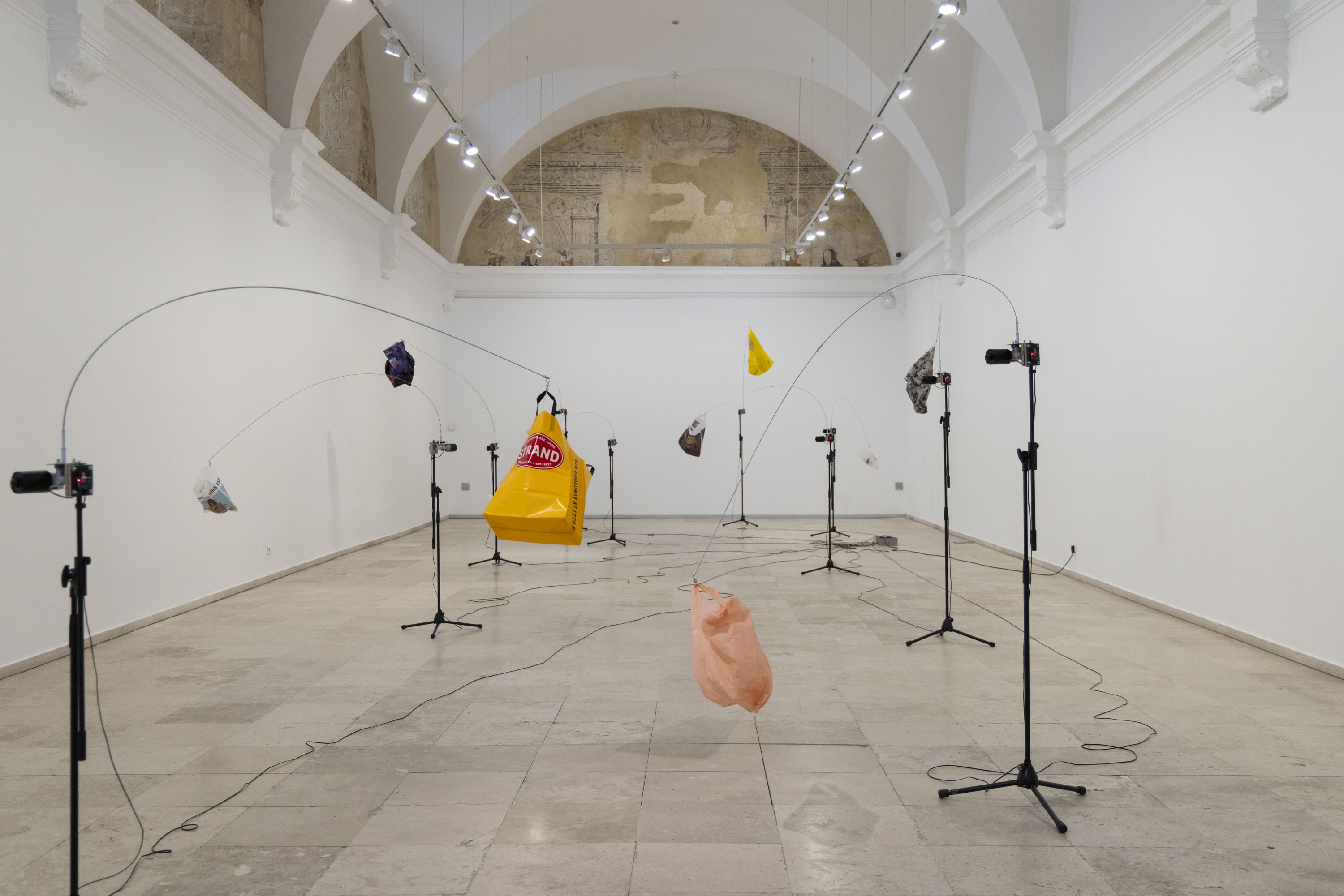
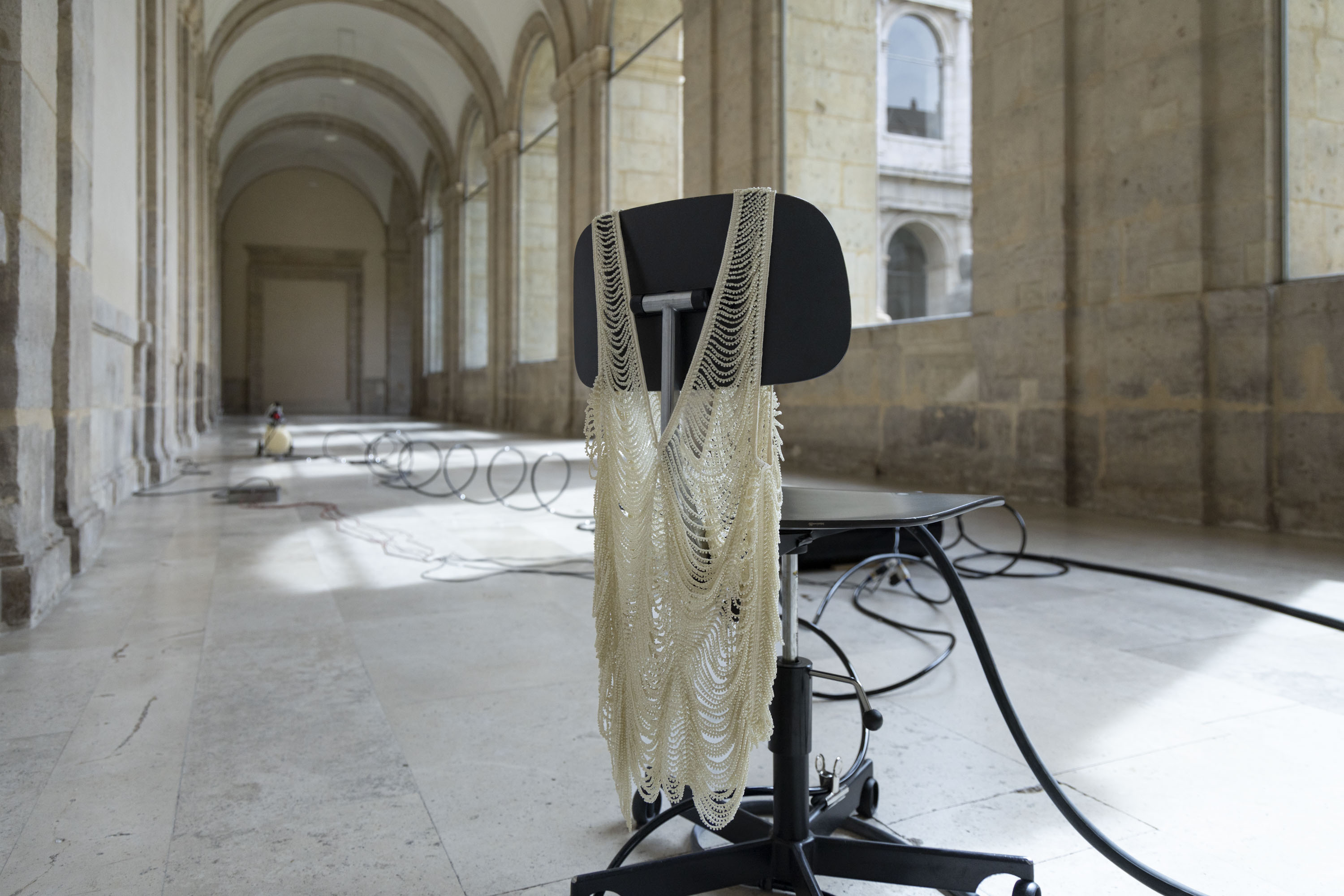
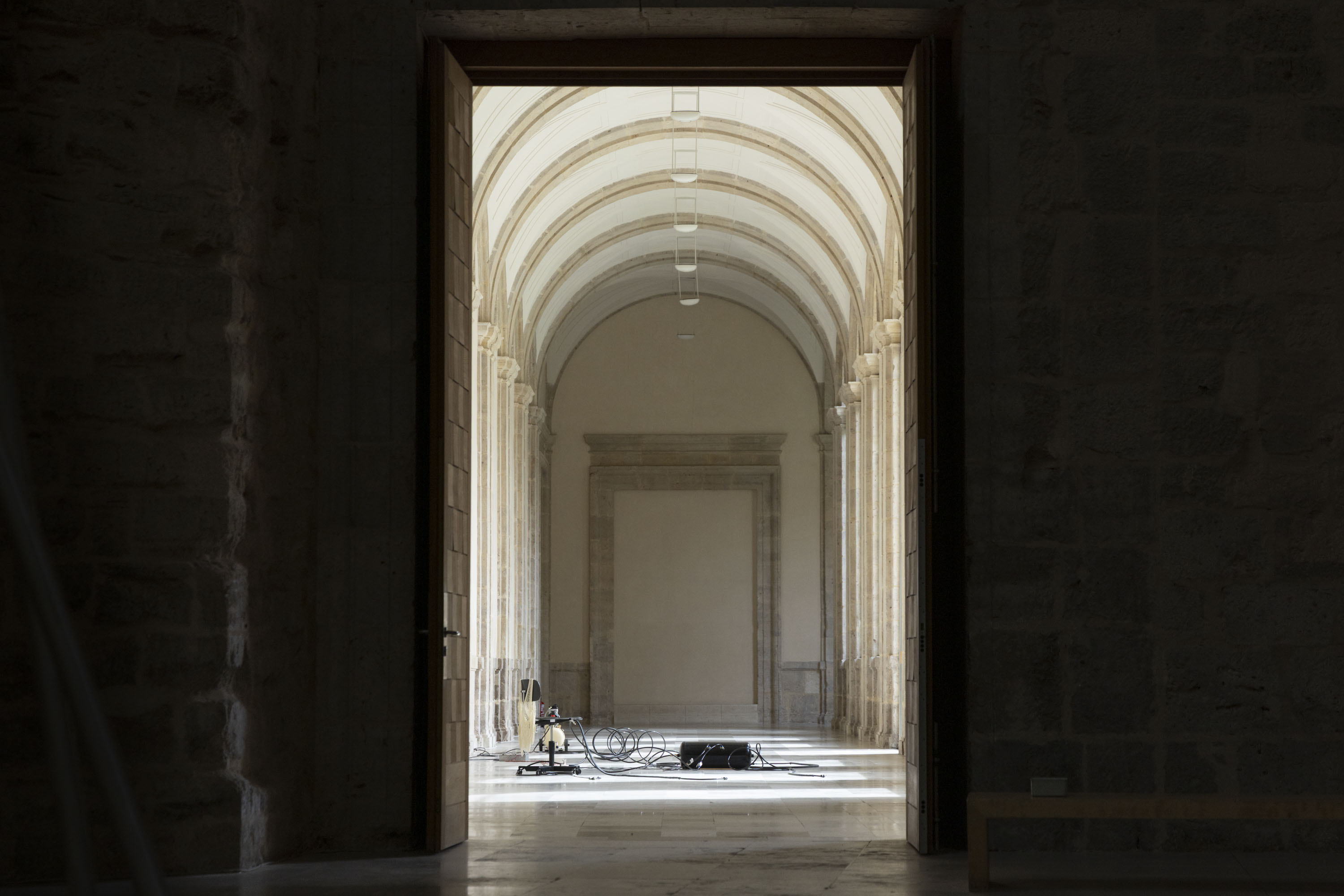
Un conjunto diferente de trabajos puebla la sala 9. Tienen una cualidad cinética y cierta querencia antropomorfa. Elementos cotidianos animados por dispositivos electrónicos producen una sensación poética, celebratoria de lo que la tecnología y lo mundano pueden construir juntos, una suerte de performatividad que toma singular vuelo en el contexto histórico que la acoge.
( ) -The air I breathe-
Núria Fuster’s work is well known to people in Valladolid. She boasts a notable presence in the Contemporary Art Collection Association, and from there, her work has been showcased in several different exhibitions of these collections that have been held at the Museum. In addition, she played a particularly significant role in an exhibition that brought great visibility to our institution – the review of sculpture in Spain entitled ‘Una dimensión ulterior’ (A Further Dimension), which was held in our galleries in the summer of 2019. Our approach to Núria’s work with a view to carrying out a specific project in our most emblematic space, the Chapel of the Counts of Fuensaldaña, therefore makes perfect sense.
Fuster, who has lived in Berlin for many years now, pays close attention to two issues: the search for new expressive possibilities in the material and the relationship the material weaves with the body. Consequently, the focus on the dynamic potential of her work is quite striking. She has studied tradition thoroughly. Names such as Rebecca Horn and Jean Tinguely come to mind, artists who emphasised the malleability of matter and the dance of bodies. Both references, among many others, permeate her work and still resonate today. With these in mind, she has conceived her intervention in the Chapel through a large body-form that stands in the middle. It seems trapped in a succinct prismatic, industrial structure, something always present in her work, but we soon realise that this form is not only not inert but actually gives us decidedly visible vital signs. Air is matter itself, and hence the title ( ) -The air I breathe-, which Fuster takes from a clear desire to breathe life into her sculptures, to turn them into a body that breathes, just like she does. The influence of the experience of nature also emerges here, both her own and that of certain other artists, some of them Castilian, whom she has turned to after being invited to work at our institution. Air, Fuster tells us, is not the negative of things; on the contrary, it is the binding space that allows them to coexist. Air brings with it the political virtue that allows bodies to be and exist, granting them the possibility of taking up the social space in which the aesthetic exploration by the artist also desires to breathe, exist and thus produce and contribute.
A different set of pieces fills Room 9. They have a kinetic quality and a certain anthropomorphic charm. Everyday objects animated by electronic devices produce a kind of poetic sensation, celebrating what technology and the mundane can build together, a kind of performativity that takes on a unique flight in the historical context that hosts it.