Porque el cuerpo mide. Mide sin querer, continuamente, ajustando el paso, recalibrando la postura, buscando la proporción que le resulta familiar. Guardamos los lugares con el tamaño que tenían cuando los conocimos, con la escala de nuestro cuerpo de entonces. Y cuando volvemos, o cuando entramos en un espacio nuevo que, sin embargo, reconocemos de alguna manera, esa memoria se activa antes que cualquier pensamiento. La escala es también una forma de afecto. Esta exposición es una puerta hacia ahí.
Esther Gatón lleva años trabajando en esa frecuencia: la de los objetos que guardan y cuentan más de lo que muestran, la de las cosas con las que uno establece una relación de empatía, que perdura a través de la escala, del tacto, del afecto que tuvimos por ellas. Para esta exposición, ha creado un engranaje que despliega atmósferas de distinta densidad y ritmo a lo largo de tres espacios, cada uno habitable de una manera distinta. El "tú" invocado en el poema de Jorge Guillén, del que esta muestra toma título, lo explica bien: no es un nombre sino una dirección. Se posa en distintos lugares de la sala, en distintas obras, y desde ahí, empieza a hablar.
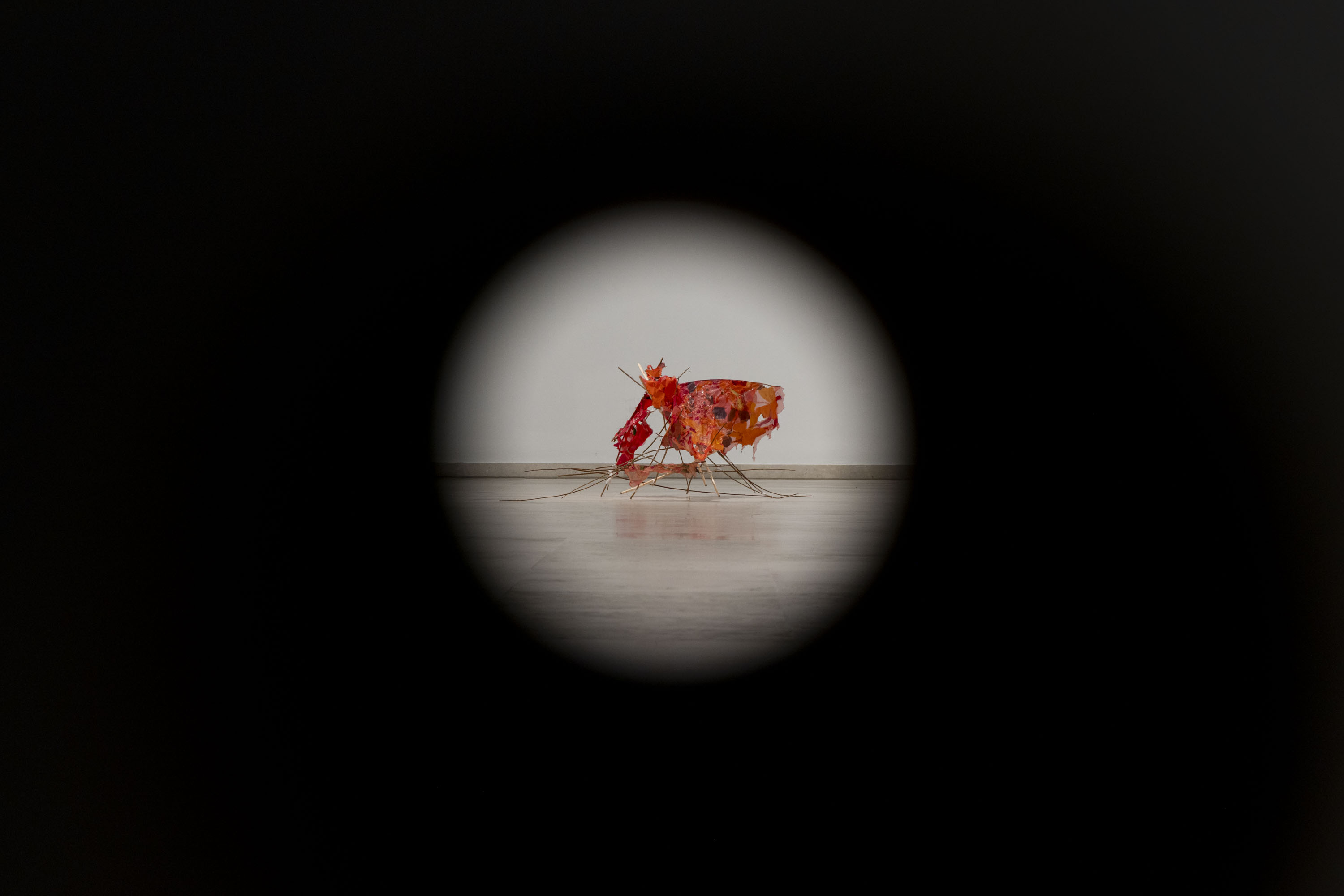
A la entrada, un sonido. Se repite con una cadencia que no es la de fuera, sino que impone su propio ritmo al cuerpo, antes de que la vista haya tomado el relevo. Como un mecanismo que alguien dejó en marcha, y que sigue funcionando sin que nadie se lo haya pedido. Una puerta normalmente cerrada se ha abierto: la luz entra con fuerza, se filtra hacia la sala siguiente por los huecos de la arquitectura, y algo en ese gesto simple cambia la naturaleza del espacio. Desde ahí, las obras esperan.
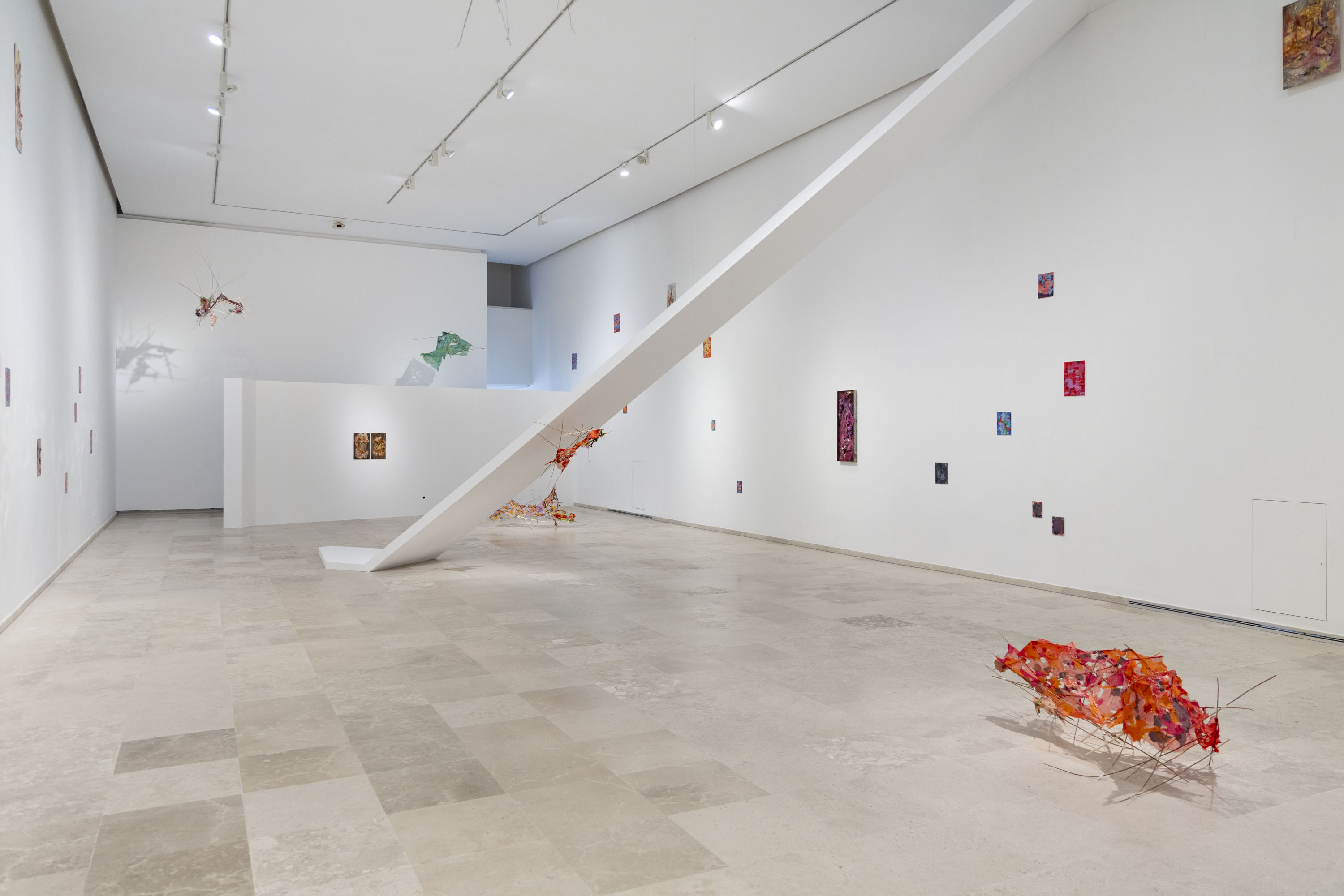
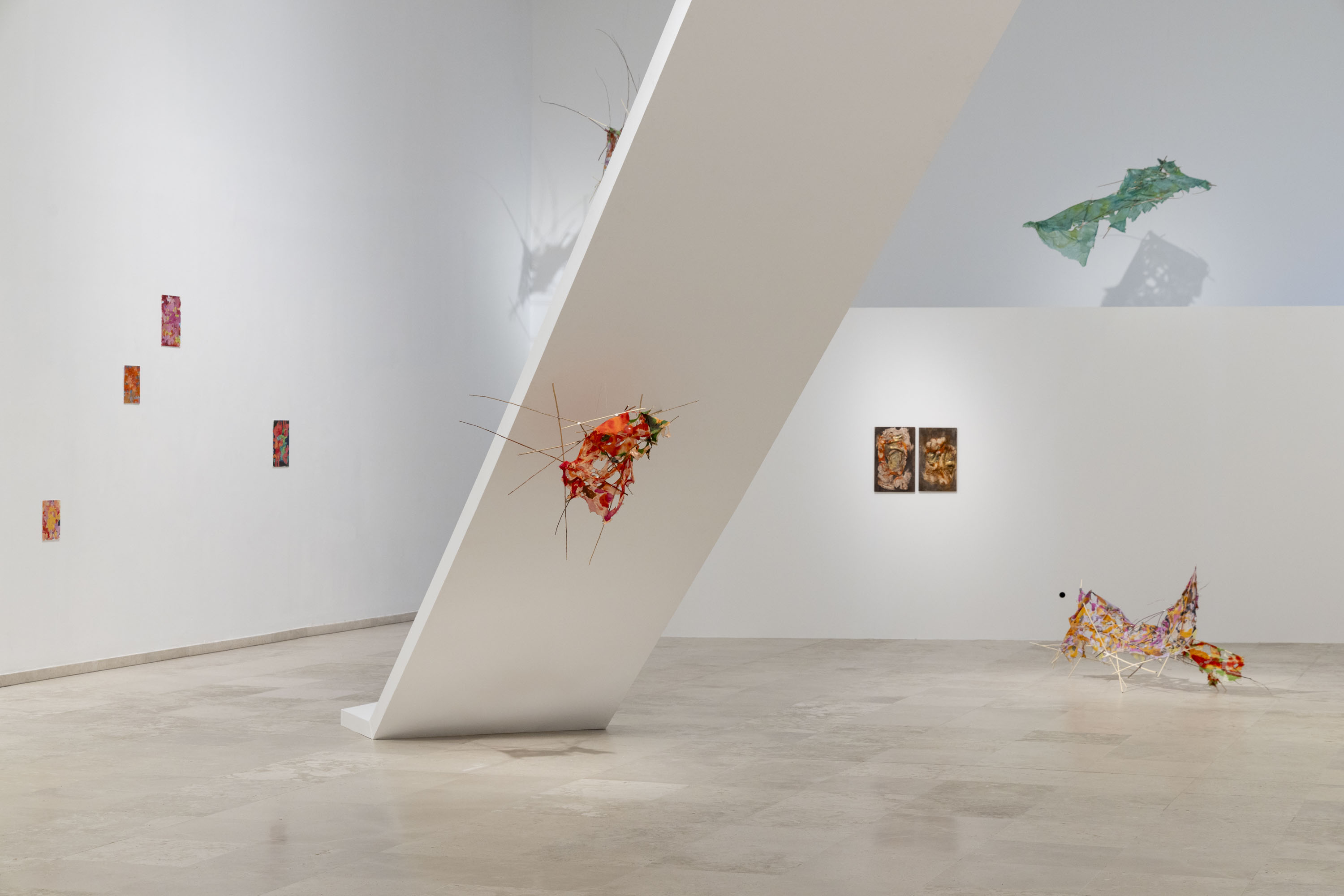
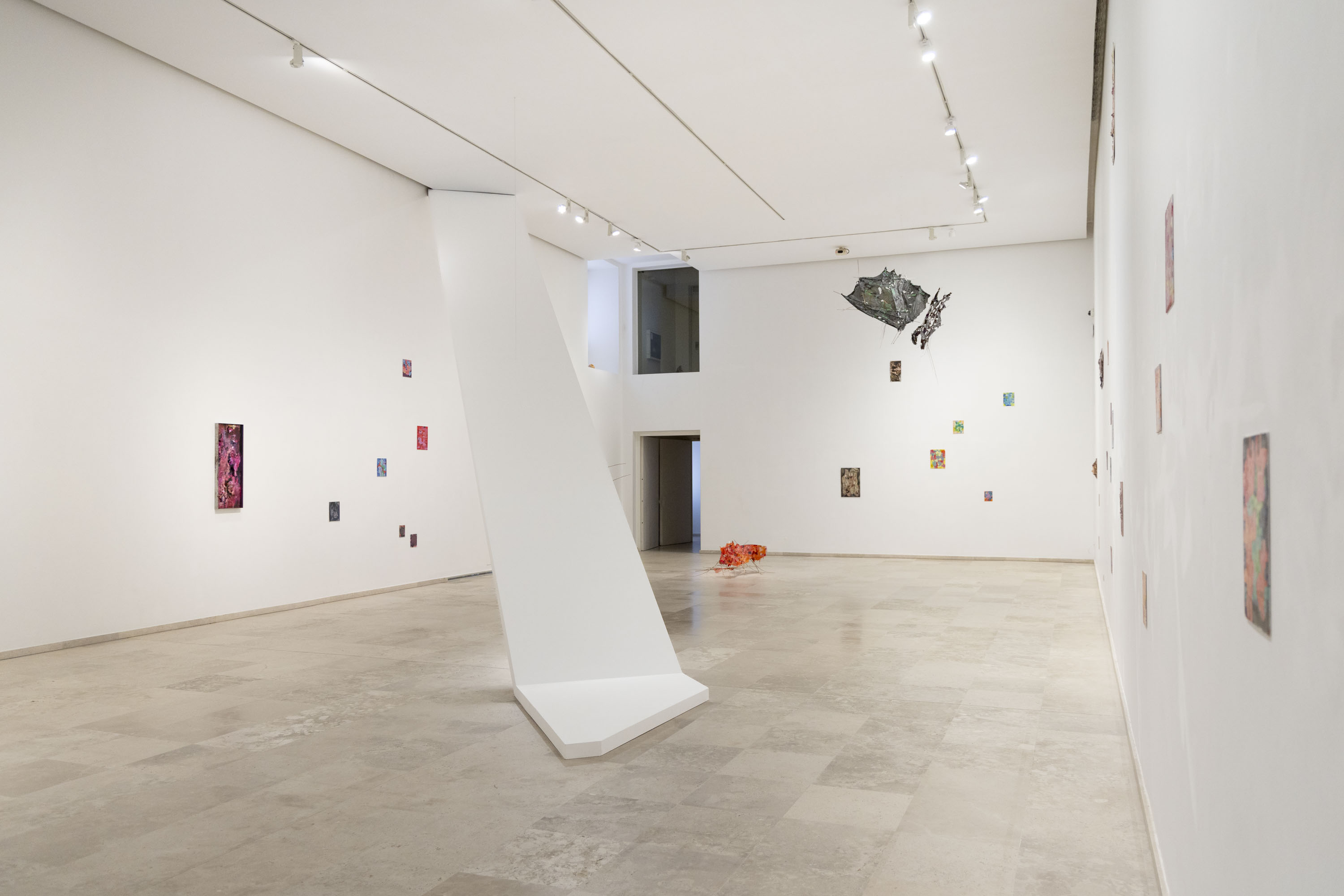
La arquitectura de la sala ha sido intervenida para escapar de su propia lógica. Las obras se dispersan por ella como si hubieran llegado a un espacio que se desmorona y fueran las responsables de sostenerlo: cada una está donde debe estar, y si una se fuera, todo se vendría abajo. Algunas emergen de la superficie, como bajorrelieves orgánicos, hechos con el material con el que se fabrican las muñecas. El cuerpo reconoce esta materia, antes de identificarla: blanda, ligeramente fría, rosada, con esa textura que fue quizás nuestro primer contacto con algo que imitaba un cuerpo, sin serlo. Como pieles que hubieran encontrado la pared para descansar. Hay también obras más pequeñas, más vulnerables. Pinturas que componen una especie de registro de la intimidad: momentos capturados con la misma cautela con la que uno conserva el poso de algo que ya no recuerda del todo. El color en ellas no se elige de una vez: llega, se posa, y se queda. Las capas se suman unas a otras con la misma lógica con la que se acumulan ciertas memorias — no por orden, sino por insistencia; porque algo vuelve hasta que encuentra su sitio. No hay fondo neutro: cada tono es ya la suma de lo anterior, una sedimentación que no busca ocultar, sino añadir. Funcionan como una polifonía: cada una tiene su propia voz y podría existir sola, pero juntas crean un diálogo que no necesita acuerdo, solo proximidad. Pequeñas y dispersas, cada una es un momento en sí misma — juntas, generan una atmósfera que sostiene a todo lo demás.
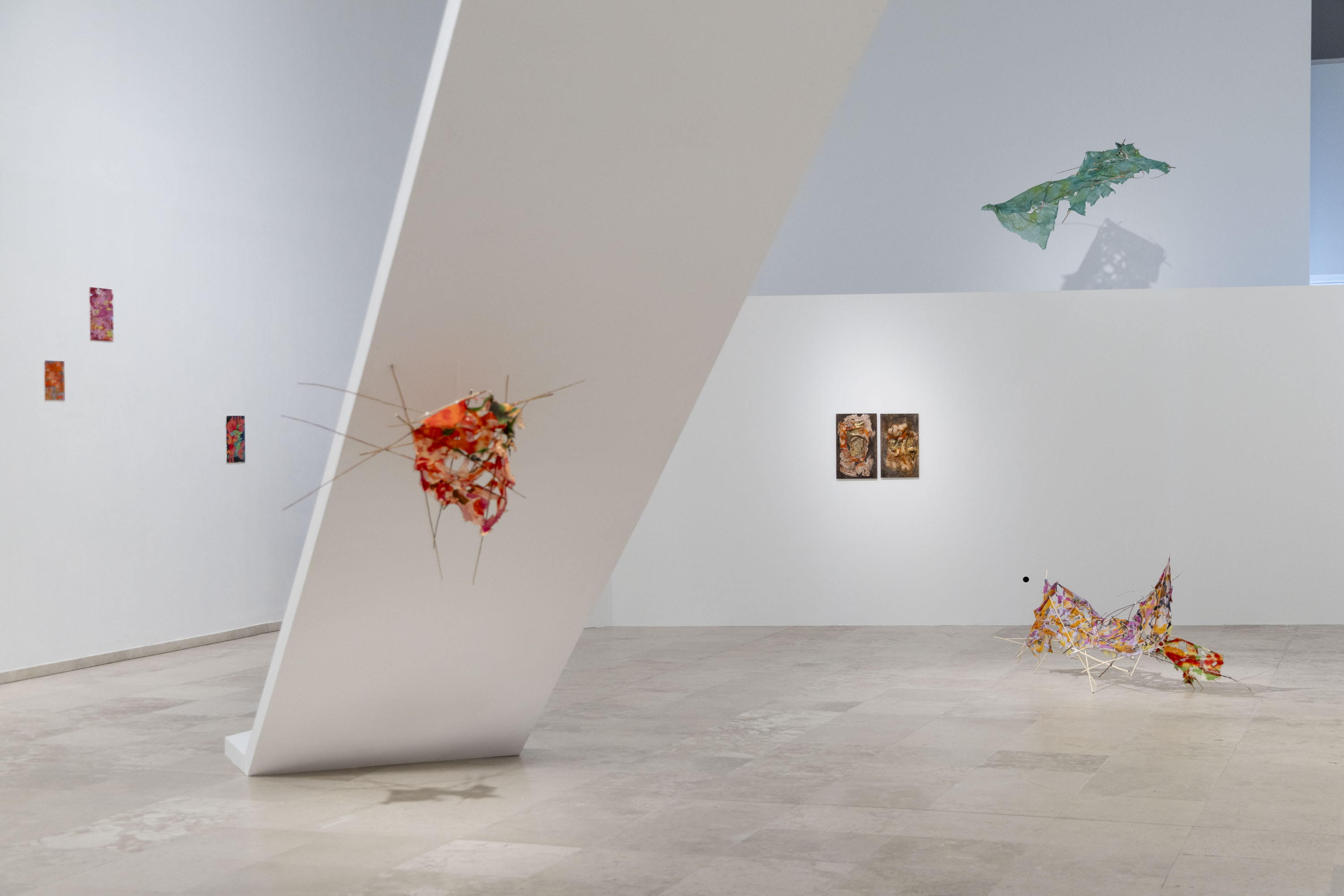
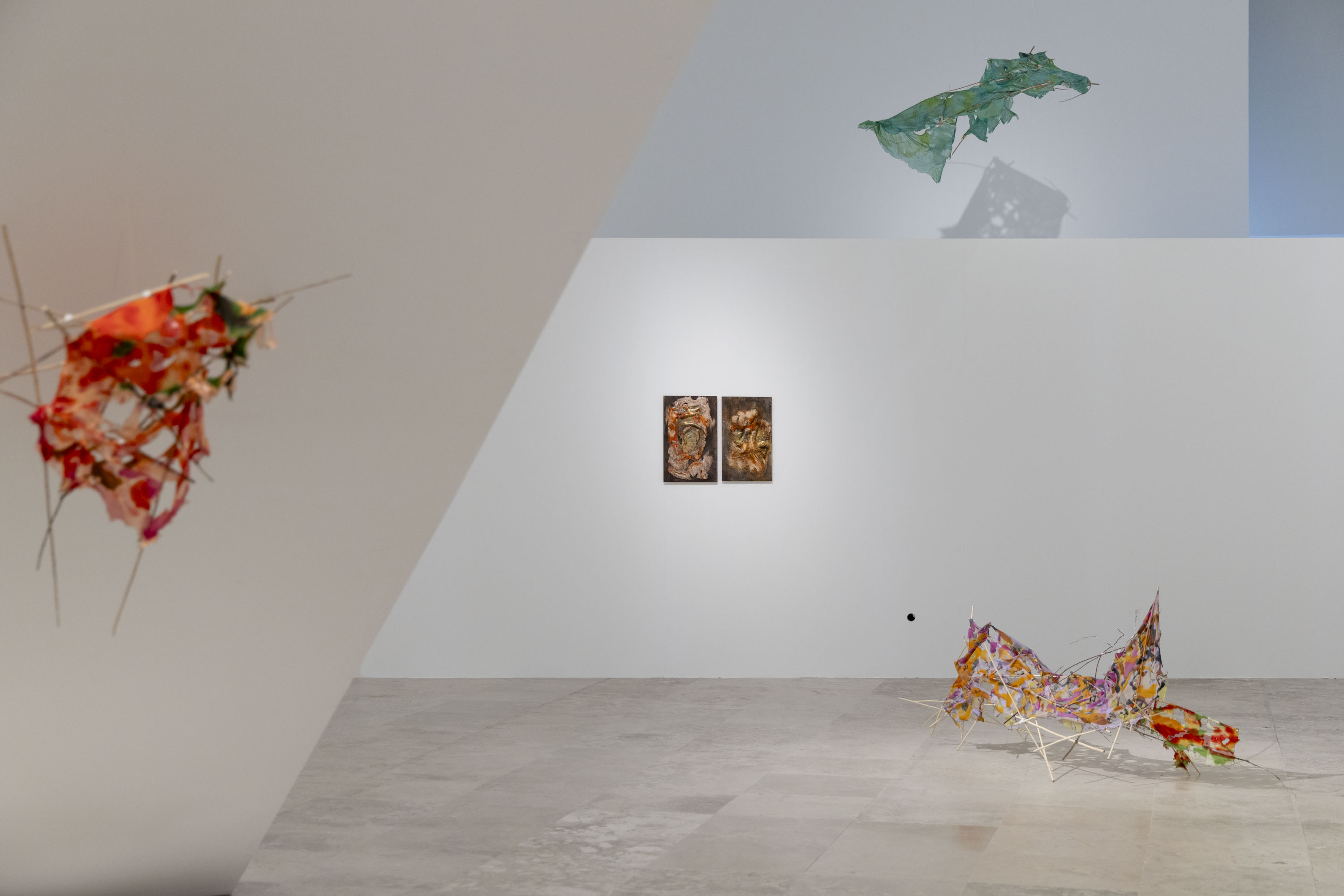
Entre ellas flotan las esculturas de bioplástico. Translúcidas, con volumen, ocupan el aire de la sala, con una presencia que no acaba de materializarse del todo. En ellas opera un artificio a la manera barroca: el hilo que asoma, la estructura que se deja ver, la tramoya visible. Hay algo de imagen dañada, de superficie cubierta que no llega a ocultar del todo lo que hay debajo de ella. La teatralidad está al servicio de la memoria. Lo que queda no es la imagen, sino lo que despierta. Su estímulo.
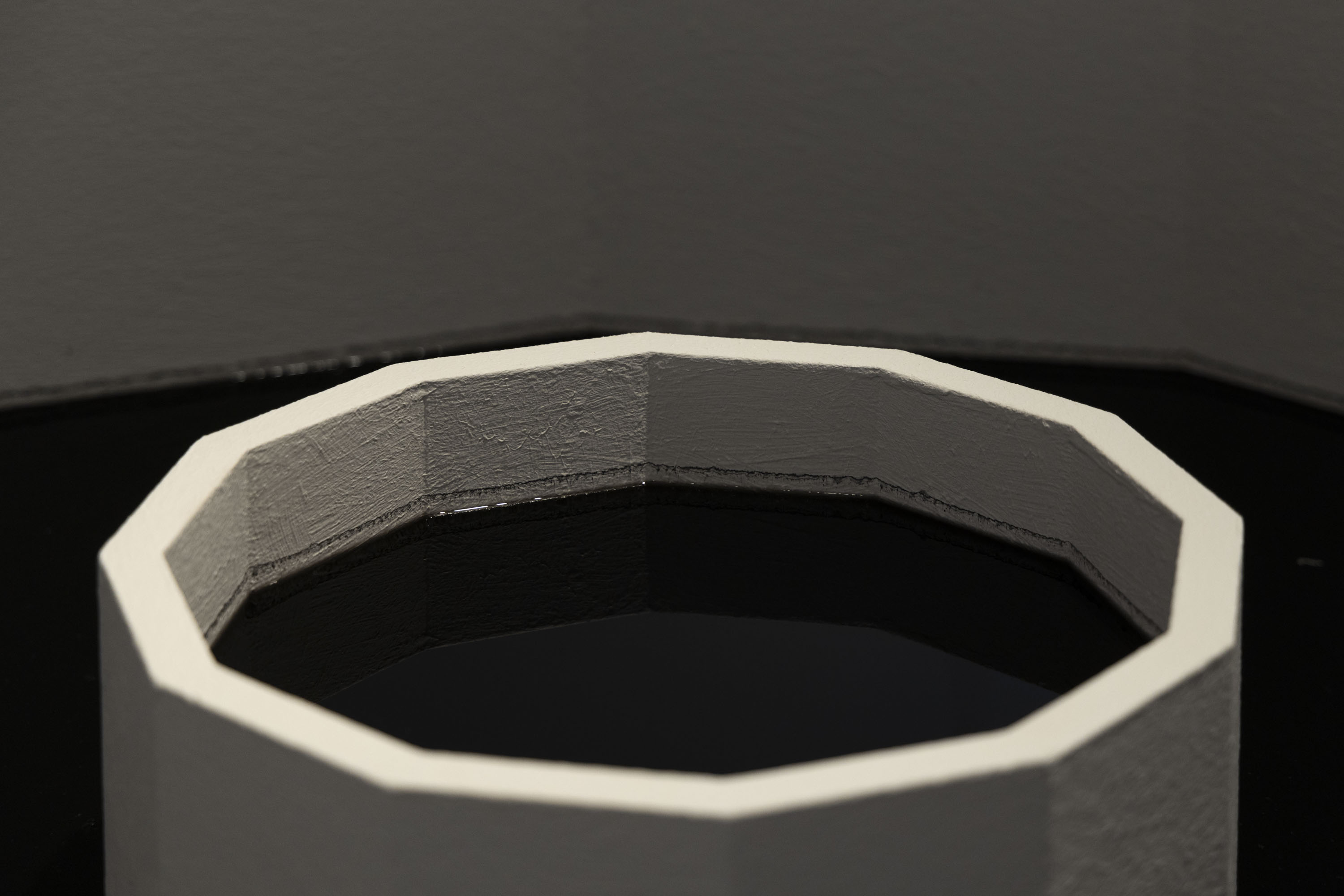
La última pieza del engranaje, es también la más silenciosa. Valladolid es una ciudad que sabe guardar silencio: uno que no es vacío, sino una forma en sí misma, algo que ocupa el espacio con la misma convicción que la piedra o la madera, que modela lo que lo rodea sin que uno se dé cuenta. Esther Gatón creció en esa atmósfera y su trabajo la lleva consigo sin necesidad de nombrarla. La última sala es donde esa herencia se hace más palpable: el tiempo aquí se vuelve tan denso que parece posible amasarlo, trabajarlo con las manos, digerirlo despacio. Es la batería del engranaje, lo que da energía a todo lo anterior, lo que permite que el recorrido no termine, sino que se reinicie otra vez. Desde ese silencio, desde esa materia espesa y familiar, volver a empezar.
Aquella virgen pequeña en el centro de la catedral, no ha cambiado de tamaño. Somos nosotros los que hemos cambiado, y con nosotros la escala de todo lo que amamos. Quizás por eso nos reconocemos en ella: no en su gloria sino en su humildad, en esa manera de persistir rodeada de algo demasiado grande. Estas obras guardan esa misma proporción: la medida exacta de un afecto que el cuerpo no olvida, aunque la mente ya no sepa nombrarlo."
Rafa Barber Cortell. Comisario
You, you, you, my incessant
"There are religious images that were found in humble places. They are usually images of Our Lady found by shepherds, sometimes children, in caves or at the side of a road. This encounter, magical or miraculous depending on who tells the story, turned a small, imperfect piece into an object of worship. Churches, cathedrals and luxurious spaces were then built around them in their honour. And yet the image remained the same: a piece of dark, almost domestic wood that one day came to light in an unexpected place. Surrounded by gold and stone, these statues seem smaller than ever. The monumentality of the space does not magnify them: it actually exposes them. It is in this disproportion, in this mismatch between the container and what it contains, that something in the body of the beholder recognises itself.
Because the body measures. It measures unintentionally, continuously, adjusting its pace, recalibrating its posture, seeking the proportions that are familiar to it. We remember places as they were when we first encountered them, on the scale of our bodies at that time. And when we go back, or when we come into a new space that we nevertheless recognise in some way, this memory is activated before any kind of thought. Scale is also a form of affection. The exhibition is a gateway to this feeling.
Esther Gatón has been working for years on this frequency: the frequency of objects that hold and tell more than they show, the frequency of things with which one establishes a relationship of empathy, which endures through scale, touch and the affection we had for them. For this exhibition, she has created a mechanism that unfolds atmospheres of different densities and rhythms in three different spaces, each inhabitable in a different way. The “you” invoked in the poem by Jorge Guillén, which the exhibition is named after, explains it well: it is not a name, but rather an address. It settles in different places in the room, in different pieces, and from there it starts to speak.
As you go in, you hear a sound. Over and over again, with a cadence that is not from the outside, but rather one that imposes its own rhythm on the body, before the eyes have taken over. Like a mechanism that someone left running, and which is still working even though no-one has asked it to. A door that is normally closed has opened: light pours in, filtering into the next room through the architectural openings, and something in that simple gesture changes the nature of the space. From here on, the works of art await us.
The architecture of the room has been altered so that it can escape from its own logic. The works of art are scattered throughout, as if they had come to a space that is falling apart and were responsible for holding it together: each one is just where it should be, and if only one were to leave, everything else would collapse. Some emerge from the surface, like organic bas-reliefs, crafted from the material used to make dolls. The body recognises this material before identifying it: soft, a little cool, pinkish, with that texture that was perhaps our first contact with something that mimicked a body, without actually being one. Like skins that have found the wall to rest upon. There are also smaller, more vulnerable pieces. Paintings that form a kind of record of intimacy: moments captured with the same caution with which you preserve the residue of something you no longer quite remember. The colour in them is not chosen all at once: it comes, settles, and stays. The layers build upon one another with the same logic by which certain memories accumulate – not in order, but through persistence, because something keeps coming back until it finds its place. There is no neutral background: each shade is already the sum of what came before, a sedimentation that seeks not to conceal, but to add. They work like a polyphony: each has its own voice and could exist on its own, but together they create a dialogue that requires no agreement, only proximity. Small and scattered, each is a moment in itself – together, they generate an atmosphere that sustains everything else.
Among them float the bioplastic sculptures. Translucent and voluminous, they fill the air in the room with a presence that never quite fully materialises. They employ a Baroque-style artifice: the thread that peeks out, the structure that reveals itself, the visible stage machinery. There is something of a damaged image here, a covered surface that fails to fully conceal what lies beneath it. The theatricality serves memory. What remains is not the image, but what it awakens. Its stimulus.
The final cog in the wheel is also the quietest. Valladolid is a city that knows how to remain silent: not an empty silence, but rather a form in its own right, something that takes up space with the same conviction as stone or wood, shaping its surroundings without anyone actually realising. Esther Gatón grew up in this atmosphere, and her work carries it within her with no need to name it. The last room is where that legacy becomes most palpable: time here becomes so dense that it seems possible to knead it, work it with your hands, digest it slowly. It is the battery of the mechanism, what powers everything that has gone before, what ensures that the journey does not end, but rather restarts once more. Beginning again from that silence, from that thick, familiar substance.
The small statue of the Virgin in the centre of the cathedral has not changed in size. It is us who have changed, and with us the scale of everything we love. Perhaps that is why we recognise ourselves in her: not in her glory but rather in her humility, in that way of persevering whilst surrounded by something that is too great. These pieces retain that same proportion: the exact measure of an affection that the body does not forget, even though the mind no longer knows what to call it."
Rafa Barber Cortell. Exhibition curator